Advanced Heat Transfer . ME 225HT
Advanced treatment of fundamental aspects of heat transfer. Covers topics such as conservation laws, steady-state and unsteady-state heat conduction,convection fundamentals, mass transfer including diffusion and phase change, and basic thermal radiation. Problems and examples include theory and applications drawn from a spectrum of engineering design and manufacturing problems.
Prerequisites: Consent of instructor.
3
UnitsLetter
Grading1, 2, 3
PasstimeNone
Level LimitEngineering
College
Predicted Grading Distribution
Lecture
Enrollment Trends
Past Enrollment Trends (1)
Grading Trends (2)
Rate My Professors
23
3.5
HW was 40% of the grade, which is way more than any other class in PSTAT that I know of. Test questions were taken directly from hw. Problems were hard, but I literally just memorized all the hw questions enough to get points on the tests. Also, he either gives you an A, B, or F. If you get a 60, that's a B. He really wants you to pass; great prof
By far my favorite Stats professor. Took him for 120A, 160A, and 170. Got at least a B in every single one. Posts all lecture notes online, so you don't have to show up (worked very well with my busy schedule). Tests take up around 60% of the grade but they're very similar to the reviews he posts, and he almost always curves the class average.
All notes are online, midterm and finals are similar to practice midterm and finals.
Zimu is a great professor. The tests were reasonable, plus he provided practice exams for us to study from. His lecture notes are straightforward and are always related to the homework assignments and exams. He is also quick to respond to emails. Not much more I can ask for from a professor.
I have to admit he is super nice, and his lecture slides are, often times, clear and serve as great study materials.
The concept of statistics was not emphasized throughout the course. The midterm exam was purely about small calculus tricks from Math 3A and 6A. To better prepare the students for industry, this course should focus more on the framework of the Stochastic Process, rather than repeat what a calculator can do.
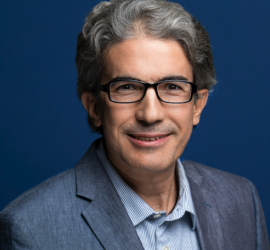 Francesco Bullo
4.1
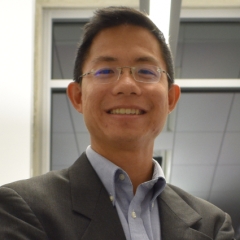 Enoch Yeung
4.6
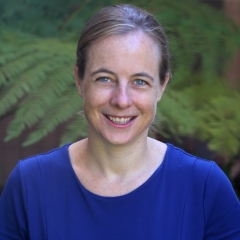 Samantha Daly
4.0
 Yon Visell
2.7
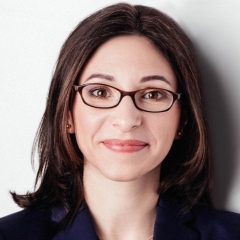 Emilie Dressaire
4.8